Portfolio · 2022
Executive Dysfunction
for percussion trio
Written for the Sō Percussion Summer Institute
Materials
Executive Dysfunction is a five-minute work for percussion trio with text by the composer, written for the Sō Percussion Summer Institute and first performed at the Princeton Public Library and Small World Coffee. The piece is built from mirrored typing and spoken text, with audience plants triggering phone alarms and live calls that drain a performer of momentum. Spoken parts move between natural emphasis and a mantra-like rhythm where marked; the written rhythms act as a guide rather than a strict score, with a sheet of speech rhythms supplied for reference. The work treats the rhythms of distracted work itself as material.
Performance Notes
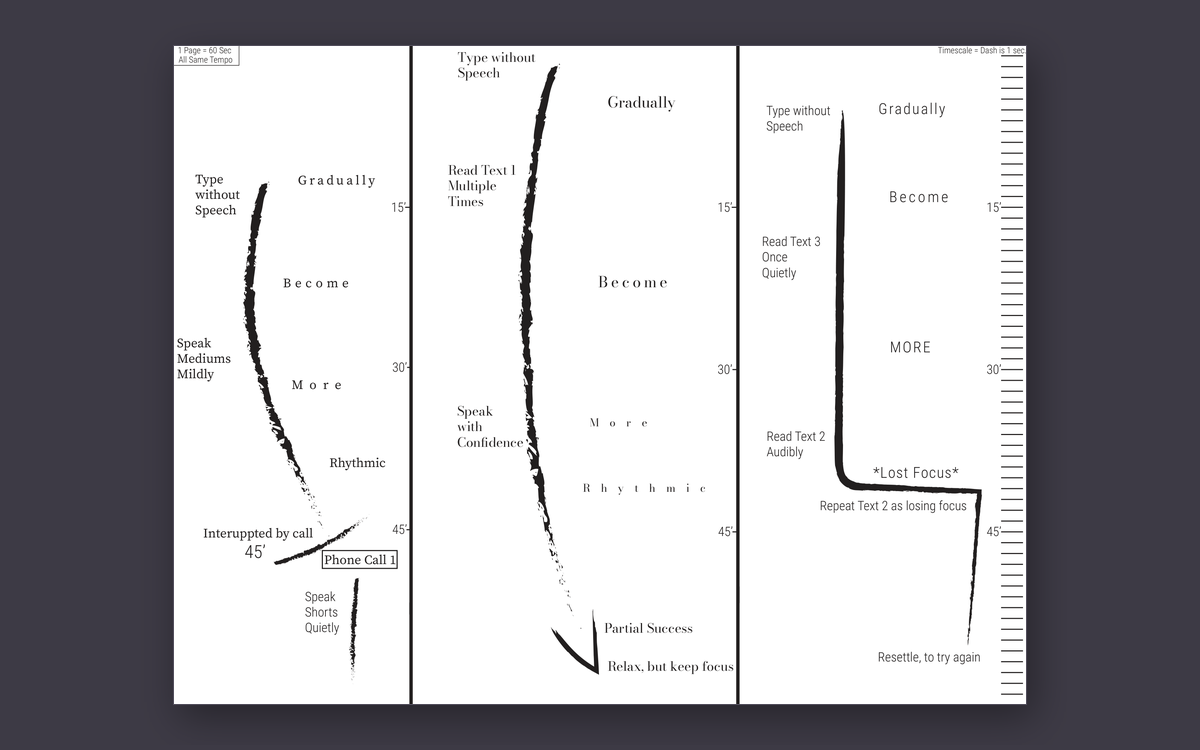
- Speech. Spoken parts should be delivered with natural emphasis where possible, or in a mantra-like rhythm where marked. Adherence to the written rhythms is not dogma but a guide. A sheet of speech rhythms is provided; some creativity will benefit performers in the graphic section. Aim to practise both a mantra-like delivery and a more conversational reading. Each performer has individual tempos except in the conventionally scored final section. Think of deviations from a straight line as loss of momentum rather than a change of direction.
- Volume of speech & phones. Phone calls are spoken quietly enough not to rise above the other performers’ text, but loud enough to catch intelligible words.
- Audience collaborators. Collaborators should sit toward the back of the audience so the samples distract the audience itself. When an alarm sounds, look out toward the general audience rather than the collaborator.
- Typing. Type along with what you are saying — the purpose is a layer of noise underneath the speech, like a shaker syncing to the voice. Accuracy of what is typed is not important; if you can easily type what you are saying, do so. Volume of typing should track the volume of speech.
- Phones. Audience plants have alarms set to go off when marked; use different alarm sounds across plants. The same plants will also call a performer’s phone — pick someone you trust with your number. One person can cover the part, but it requires multiple timers and call cues.
- Phone-call cues. Each call should appear to sap your energy. Take time returning to the typing and talking. If you would rather improvise the words of the call, keep the topic to work, deadlines, or inability to see others because of obligations.
Guidelines on particular instructions
The terms Shorts, Longs, and Repeats describe sections of the text and how to play with them. Read the complete text aloud several times, then read a stanza and experiment with using other lines to construct new syntactic shapes. The new lines need not make the most sense; often they will.
- Type without speech. Typing without speech should still follow the rhythms of the speech. Pick any text.
- Like a mantra. Monotone, mostly the same rhythmic value.
- Losing focus / Lost focus. The rhythmic units break down into smaller bits over time. It can begin as a demoralised slowing or as sporadic tempo-increase frustration. At the peak of the instruction, simply appear distracted from the implied work on the computer — even consider checking your phone before rejoining.
- Partial success. Should sound closer to the more rigid quality of the notated score. Less impulse; still speech-like.